
Blog & News / November 5, 2026
Industrial Enclosure Hinge Selection: An OEM Procurement and Validation Guide
For equipment OEMs, enclosure manufacturers and procurement teams, the right hinge is one that meets the installed door requirements and can be supplied repeatedly against a controlled specification. A low unit price or a visually similar sample is not enough to establish production suitability. Start with the door assembly, validate the proposed hinge, and agree the commercial and quality requirements before volume purchasing.
This guide addresses project and repeat-production sourcing for industrial cabinets and equipment enclosures. It provides a shared checklist for engineering, quality and purchasing teams.
1. Define the business risk before comparing unit prices
A hinge discrepancy can extend beyond the component itself: a different hole pattern can interrupt assembly; a finish mismatch can trigger inspection and sorting; an unapproved revision can invalidate the approved sample; and uncertain delivery can disrupt cabinet production. Treat these as sourcing risks to evaluate, rather than assuming every low-cost option will cause them.
For a useful comparison, request pricing against the same drawing revision, material, finish, packaging and order schedule. Compare the expected cost of installation, inspection and replenishment alongside purchase price. Ask suppliers to identify deviations explicitly instead of accepting a general statement that the hinge is equivalent.
2. Give engineering and suppliers the same application baseline
| Information to define | Why it matters to the project |
|---|---|
| Door height, width, total mass and installed accessories | Establishes the application being evaluated; door geometry matters alongside mass. |
| Hinge quantity, spacing, orientation and mounting position | Allows comparison with the supplier’s stated load conditions. |
| Door and frame drawings, thickness and fasteners | Helps identify mounting and assembly constraints. |
| Required opening angle and surrounding clearances | Checks access, interference and maintenance requirements. |
| Operating frequency, environment and expected service conditions | Defines the evidence and validation the project needs. |
| Drawing revision and acceptance requirements | Creates a common reference for quotations, samples and repeat orders. |
Do not calculate a verified hinge rating simply by dividing door mass by the number of hinges. Ask for applicable load directions, mounting assumptions and test conditions. Manufacturer technical literature distinguishes axial and radial loads and notes that environmental conditions can affect suitability; catalogue values need interpretation for the proposed assembly.
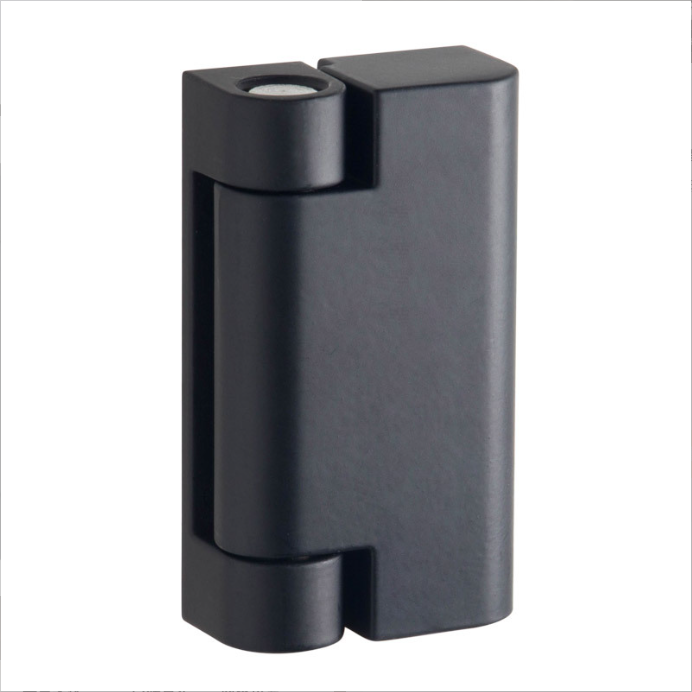
3. Shortlist hinge types around the assembly process
| Hinge approach | Potential application fit | Questions before approval |
|---|---|---|
| Butt or discrete enclosure hinges | Individual mounting points with accessible installation locations | Are spacing, fasteners, alignment and frame stiffness appropriate? |
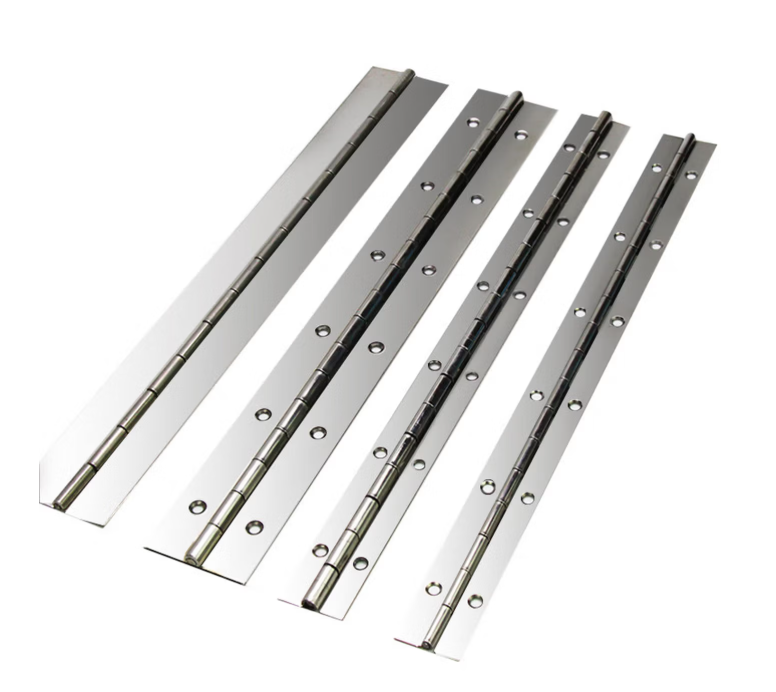
| Continuous or piano hinges | A long attachment interface along the door edge | How will hole positions, straightness, length and installation tolerances be controlled? |
| Removable hinges | Assemblies requiring door removal for access or service | Is removal clearance available, and is retention adequate during normal operation? |
| Concealed hinges | Projects requiring internal mounting or a specific exterior appearance | Does the internal space allow the full opening path without interference? |
| Weld-on hinges | Compatible metal assemblies using a qualified welding process | How will welding distortion, alignment and finish protection be managed? |
These are selection considerations, not blanket recommendations. If positioning or controlled movement is required, specify that function separately. An ordinary hinge should not be assumed to hold a lid open. Counterbalance and torque products require application-specific selection.
4. Ask for evidence that can support supplier approval
Request the exact material designation, finish specification, dimensional drawing, manufacturing tolerances and available load or cycle-test information. A statement such as stainless steel or corrosion resistant is too broad for a controlled purchasing specification. Where a test report is supplied, confirm the tested part, method, mounting conditions and relevance to your application.
Agree which characteristics will be checked on receipt: for example mounting dimensions, pin fit, opening movement, visible finish and identification. If certificates, restricted-substance declarations or traceability records are required, list the exact documents in the RFQ and confirm availability before supplier nomination. Do not assume they accompany every standard product.
5. Validate the installed assembly before releasing volume orders
- Document review: reconcile the proposed drawing and all deviations with the current enclosure design.
- Sample evaluation: install samples on a representative door and frame using the intended fasteners and process.
- Functional checks: assess movement, alignment, clearances, latch engagement and seal contact against defined acceptance criteria.
- Application testing: conduct the load, operating-cycle or environmental evaluation required by your engineering team.
- Production approval: record the approved configuration, sample reference and inspection requirements before repeat purchasing.
For illustration, consider an enclosure manufacturer changing an existing hinge to an alternative source. Even when the nominal hole spacing matches, the team still needs to compare the complete drawing, mounting fit, opening path and finish, then evaluate the assembled door. This is a hypothetical sourcing scenario, not a VOSNEX customer case or a claim of interchangeability.
A hinge alone does not establish an enclosure’s ingress-protection rating. The seals, joints, latch arrangement and complete enclosure require the relevant verification.
6. Control repeat supply and engineering changes
Before agreeing a recurring supply arrangement, discuss forecast volumes, release quantities, replenishment timing, packaging and identification. Separate prototype demand from pilot-build and annual requirements so quotations reflect the intended purchasing pattern.
Ask how changes to material, tooling, dimensions, finish or manufacturing source will be communicated and approved. Define the response process for a nonconforming delivery and how the affected batch will be identified. These are contract and supplier-review topics to confirm; they are not services or lead times that should be assumed without agreement.
7. Send a project RFQ that can be reviewed efficiently
To help VOSNEX coordinate relevant product and supplier information, send the following project pack to sales@vosnex.com:
- Company name, project or equipment family, and the purchasing contact.
- Drawing or existing part reference, including the current revision.
- Door dimensions and total mass, hinge layout and mounting details.
- Material, finish, operating environment and required movement.
- Acceptance criteria, required test evidence and documentation.
- Sample quantity, pilot-build quantity, expected annual usage and order releases.
- Target sample date, production schedule and delivery destination.
- Any permitted alternatives or requirements that must not change.
Request a project-based quotation: submit your requirements and reference this guide. VOSNEX supports product sourcing and supplier coordination; technical suitability, documentation, sample arrangements, pricing and delivery commitments are confirmed for the specific project. Confidential drawings should be shared through a channel and confidentiality arrangement agreed with your team.
Browse enclosure hinges, continuous and piano hinges, or heavy-duty hinges as starting points for your shortlist.
Questions OEM purchasing teams frequently need to resolve
Can we approve an alternative hinge from dimensions alone?
Matching dimensions are a starting point. Review materials, finish, mounting, operating behaviour, applicable performance evidence and the assembled door before approving an alternative.
What should an annual-volume RFQ include?
Include expected annual consumption, typical order quantity, release schedule and delivery requirements, alongside the controlled technical specification. A forecast is different from a confirmed purchase commitment.
Should we specify a fixed number of opening cycles?
Your engineering team should define a requirement appropriate to the service conditions and a suitable test method. A cycle count without load, mounting and acceptance conditions is insufficient for comparing evidence.
Can VOSNEX confirm a quotation from a photograph?
A photograph can begin the discussion, but a production quotation may require dimensions, material, finish, quantity and application details. Any proposed alternative needs review and approval against the actual requirements.
Technical references
For background on the distinction between hinge load directions and the limitations of catalogue test values, see Elesa+Ganter: metal hinge load ratings. For the range of hinge functions, see Southco: hinges. These independent manufacturer references provide general context; their product ratings and capabilities must not be attributed to VOSNEX products.